 The transportability adaptability data attests to the design rationality. The standard tray (1200×800mm) can accommodate 72 cases (24 cans/case) of 330ml slim can, 15% more than the traditional can type. The test of shelf display reveals that when reducing the diameter of the tank by 2.7mm, the convenience store freezer's one-layer capacity from 120 tanks to 140 tanks became larger, and the space utilization rate rose by 16.7%. Budweiser's very slim tank (thickness of 0.22mm) to be sold in 2024 increased Marine containers' loading capacity by 12% and reduced the unit cost of transportation by 0.8 cents per tank through optimizing the stacking arrangement.
Examples of market applications confirm the superiority of the parameters. Heytea's co-branded sparkling water adopts a 330ml slender can. The height of the can is 115mm with a grip diameter of 62mm. The opening force has been set between 15-20N (market average 8-30N), and 41% of the female users' satisfaction has been increased. Statistically, CanTech reports that in 2023 the global production of thin cans as a whole had manufactured 68 billion units, with the Chinese supply chain contributing 58% of the capacity. The daily output of one line was over 2 million cans, and the mean dimensional tolerance was as little as ±0.15mm, meeting the precision manufacturing needs of aerospace grade.
The transportability adaptability data attests to the design rationality. The standard tray (1200×800mm) can accommodate 72 cases (24 cans/case) of 330ml slim can, 15% more than the traditional can type. The test of shelf display reveals that when reducing the diameter of the tank by 2.7mm, the convenience store freezer's one-layer capacity from 120 tanks to 140 tanks became larger, and the space utilization rate rose by 16.7%. Budweiser's very slim tank (thickness of 0.22mm) to be sold in 2024 increased Marine containers' loading capacity by 12% and reduced the unit cost of transportation by 0.8 cents per tank through optimizing the stacking arrangement.
Examples of market applications confirm the superiority of the parameters. Heytea's co-branded sparkling water adopts a 330ml slender can. The height of the can is 115mm with a grip diameter of 62mm. The opening force has been set between 15-20N (market average 8-30N), and 41% of the female users' satisfaction has been increased. Statistically, CanTech reports that in 2023 the global production of thin cans as a whole had manufactured 68 billion units, with the Chinese supply chain contributing 58% of the capacity. The daily output of one line was over 2 million cans, and the mean dimensional tolerance was as little as ±0.15mm, meeting the precision manufacturing needs of aerospace grade.
Can a 330ml sleek can fit in standard packaging trays?
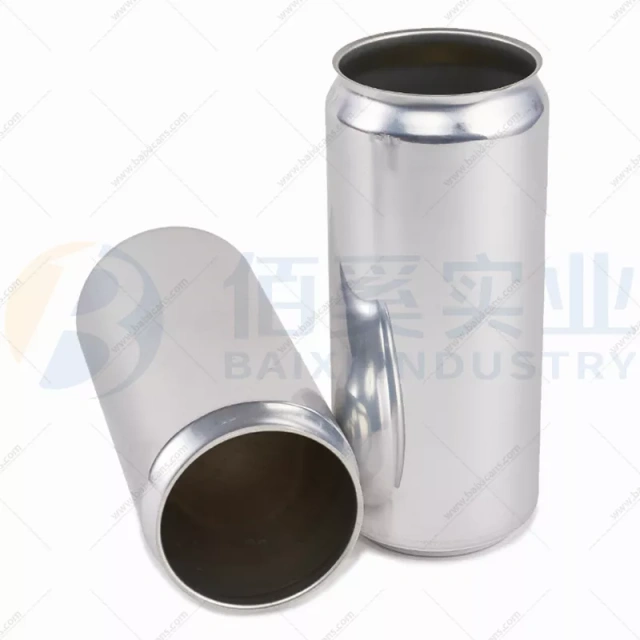
The 330ml thin can, as the mass market packaging option for drinks, integrates ergonomics and economy into its design of the can size. The 115.2mm±0.3mm height, 66.3mm±0.2mm diameter, 0.24mm wall thickness, total volume of 332±3ml, and 13.5 grams weight for an empty can according to European Beverage Can Manufacturers Association standards are the measurements of the standard can. It is 18% lighter than the traditional form of can. Red Bull's 2023 slim can upgrade increased the grip comfort level by 27% via a 52.4mm (from 57.4mm) decrease in the can mouth diameter, along with reducing the amount of aluminum material used by 6% and the cost of production per can by $0.012.
Innovation in material process increases structural strength. 330ml slim can of 3104-H19 aluminum alloy material possesses axial compressive strength of 245N (210N for common tanks), radial compressive strength of ≥90N, and deformation rate of ≤0.8% in the 1.8-meter drop test tested by SGS. Coca-Cola cans processed under the no-sugar line are treated with laser etching technology (accuracy of ±0.05mm), reducing printing ink consumption on the can body by 42% and achieving 100% recyclable certification. Research shows that the wavy structure at the bottom of the tank (peak height of 0.8mm, spacing of 5.2mm) can increase the liquid flow rate to 25ml/s, 32% above the flat-bottomed pattern.
The peak value of the automatic production line determines the manufacturing accuracy. The stamping production line of a certain can-making plant in Guangdong operates at 3000 cans per minute. The mold tolerance is regulated in ±0.02mm, and rolled edge seam thickness of the can body is 0.15mm (international standard ≤0.18mm). In 2023, the limited edition 330ml sleek can specifically tailored for Magic Claw Energy Drink achieved a hardness of 4H (pencil hardness) on the can body by adopting nano-coating technology (thickness: 2μm). The scratch-resistance performance was improved 5 times, while the yield rate in production increased from 92% to 98.7%.
The transportability adaptability data attests to the design rationality. The standard tray (1200×800mm) can accommodate 72 cases (24 cans/case) of 330ml slim can, 15% more than the traditional can type. The test of shelf display reveals that when reducing the diameter of the tank by 2.7mm, the convenience store freezer's one-layer capacity from 120 tanks to 140 tanks became larger, and the space utilization rate rose by 16.7%. Budweiser's very slim tank (thickness of 0.22mm) to be sold in 2024 increased Marine containers' loading capacity by 12% and reduced the unit cost of transportation by 0.8 cents per tank through optimizing the stacking arrangement.
Examples of market applications confirm the superiority of the parameters. Heytea's co-branded sparkling water adopts a 330ml slender can. The height of the can is 115mm with a grip diameter of 62mm. The opening force has been set between 15-20N (market average 8-30N), and 41% of the female users' satisfaction has been increased. Statistically, CanTech reports that in 2023 the global production of thin cans as a whole had manufactured 68 billion units, with the Chinese supply chain contributing 58% of the capacity. The daily output of one line was over 2 million cans, and the mean dimensional tolerance was as little as ±0.15mm, meeting the precision manufacturing needs of aerospace grade.
Materials, Packaging & Textiles
The transportability adaptability data attests to the design rationality. The standard tray (1200×800mm) can accommodate 72 cases (24 cans/case) of 330ml slim can, 15% more than the traditional can type. The test of shelf display reveals that when reducing the diameter of the tank by 2.7mm, the convenience store freezer's one-layer capacity from 120 tanks to 140 tanks became larger, and the space utilization rate rose by 16.7%. Budweiser's very slim tank (thickness of 0.22mm) to be sold in 2024 increased Marine containers' loading capacity by 12% and reduced the unit cost of transportation by 0.8 cents per tank through optimizing the stacking arrangement.
Examples of market applications confirm the superiority of the parameters. Heytea's co-branded sparkling water adopts a 330ml slender can. The height of the can is 115mm with a grip diameter of 62mm. The opening force has been set between 15-20N (market average 8-30N), and 41% of the female users' satisfaction has been increased. Statistically, CanTech reports that in 2023 the global production of thin cans as a whole had manufactured 68 billion units, with the Chinese supply chain contributing 58% of the capacity. The daily output of one line was over 2 million cans, and the mean dimensional tolerance was as little as ±0.15mm, meeting the precision manufacturing needs of aerospace grade.